
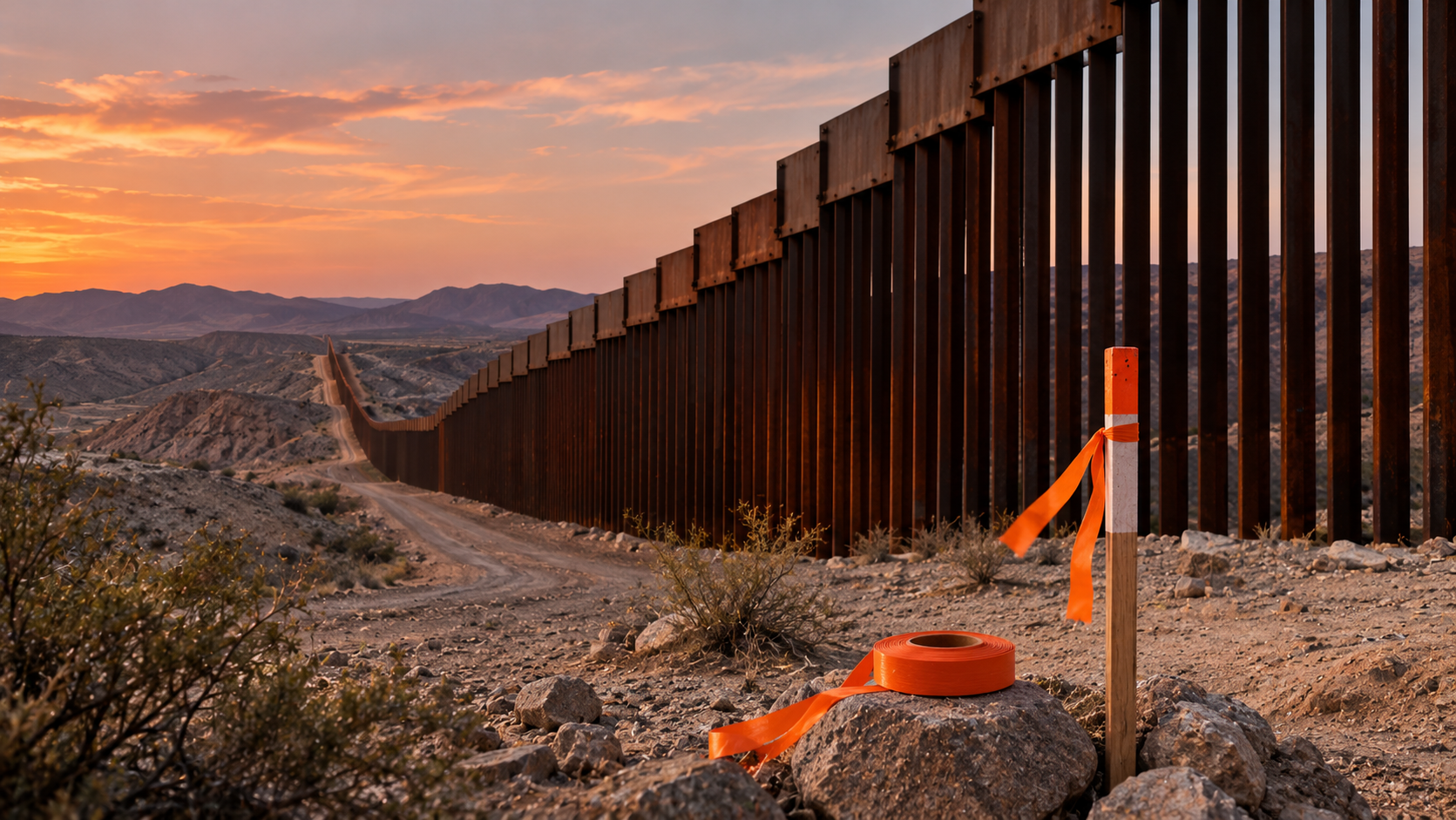
On Monday, 9 November 2026, the US Supreme Court granted an emergency application by the federal government in Mullin v. Friends of the Ruidosa Church (No. 26A560), allowing construction of a border wall in the Big Bend region of Texas to resume. The Court acted in an unsigned four-page opinion. Justice Ketanji Brown Jackson was the only noted dissenter, and she gave no reasons, so the vote is reported as 8 to 1. The order is temporary and does not decide the final legality of the project.
The Waivers
Successive Homeland Security Secretaries, Kristi Noem and then Markwayne Mullin, issued three waivers of environmental and conservation laws for wall construction in the Big Bend region, which includes parts of Big Bend National Park. The waivers rest on a provision of the Illegal Immigration Reform and Immigrant Responsibility Act of 1996 that lets the Secretary waive legal requirements to ensure the expeditious construction of border barriers and roads. That statute also limits judicial review, so a challenge to a waiver goes to a district court and then, if the courts allow it, directly to the Supreme Court and not to a court of appeals. That is why the administration came to the Supreme Court without first going through the Fifth Circuit.
The Challengers
The case was filed in April 2026 by the Center for Biological Diversity, a group called Friends of the Ruidosa Church, and Danny William Miller Jr., a local river guide. Reports describe it as one of six lawsuits seeking to stop construction in Big Bend. Work in the area has included clearing inside Big Bend National Park, and reports mention an excavation near the Santa Elena Canyon trailhead in August 2026. The affected counties are Brewster, Presidio and Jeff Davis, and reports say the administration has awarded about 7.5 billion dollars in contracts for roads, barriers and technology in the area.
The District Court Order
On 2 October 2026, US District Judge Kathleen Cardone of El Paso, an appointee of President George W. Bush, temporarily barred the Department of Homeland Security from continuing construction in the Big Bend region until it complied with environmental and other applicable laws. She released her written opinion on 14 October and declined to pause her ruling so the government could seek Supreme Court review. She found that the challengers were likely to succeed on their claim that the Secretary lacked authority to issue the waivers, and she applied the major questions doctrine, under which Congress must speak clearly before an agency is read as having power over matters of vast economic or political significance. She noted that the Big Bend sector, which covers more than a quarter of the border, accounts for only a very small share of migrant apprehensions, and she reasoned that if it were a high-entry area, every sector would be, which would make the limiting language of the statute meaningless.
The Government's Case
Solicitor General D. John Sauer argued that Judge Cardone had no power to hear the claim, because it was a statutory claim that Congress had barred district courts from entertaining, and that Congress had clearly authorised both the building of barriers and the waiver of legal requirements to speed construction. He also said that the order imposed costs of roughly 500,000 dollars for each day that work was halted.
What the Supreme Court Held
The Court said the government is exceedingly likely to prevail on its argument that the district court could not consider the claim. It characterised the argument as asserting only that the Secretary exceeded statutory authority, and not that the Constitution was violated. It said that the major questions doctrine is a rule for interpreting statutes, so there is no constitutional version of it that could bring the claim within the narrow review that Congress allowed. The Court found that the other factors for a stay favoured the government, including the delay to construction and the interest in border security, and it held that the government's interest outweighed the aesthetic, recreational and environmental harms alleged. It granted the stay but refused the government's request for summary reversal, which would have ended the case without further briefing.
Reaction
Environmental groups called the decision a blow, with the Center for Biological Diversity saying that it lets contractors destroy desert and canyon walls before courts rule on the lawfulness of the waivers. Residents and critics argue that the terrain already deters illegal crossings. Texas Land Commissioner Dawn Buckingham had earlier sent a cease-and-desist letter to Customs and Border Protection and a contractor over alleged clearing of state land in Presidio County.
Why It Matters
The order shows how the Court views challenges to waiver-based construction. Where Congress has authorised waivers and limited judicial review, landowners, environmental groups and communities face a steep path in court, and arguments framed as constitutional versions of statutory doctrines are unlikely to succeed. The stay lasts while the case goes through the appellate process or any request for Supreme Court review. Readers should treat this account as drawn from press reports and the SCOTUSblog summary of the order, and consult the opinion for exact wording.