
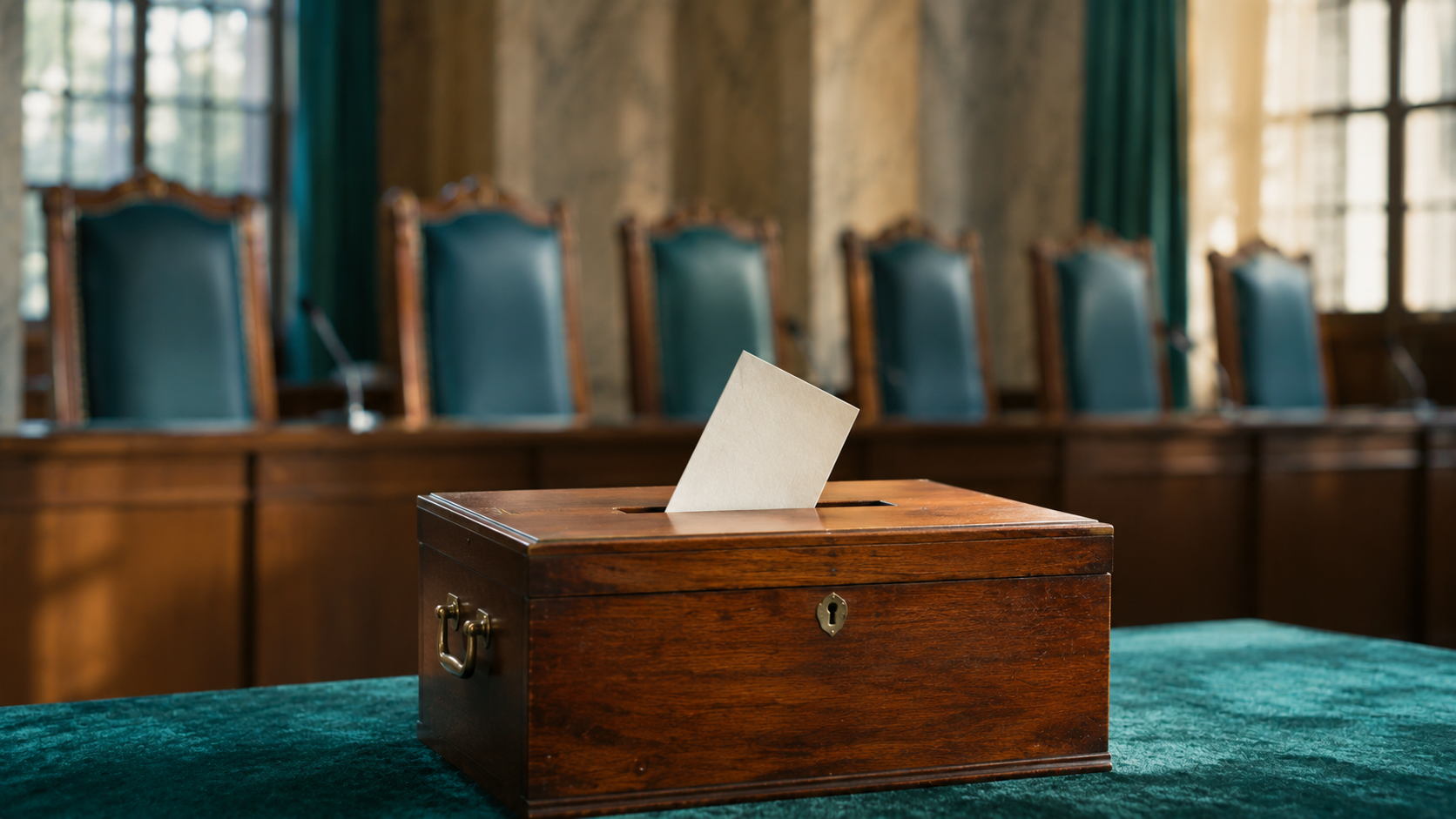
The UN General Assembly and Security Council met together on 3 November 2026 and elected five judges to the International Court of Justice. The winners are Dapo Akande of the United Kingdom, Francois Alabrune of France, Mahmoud Daifallah Hmoud of Jordan, Rena Lee of Singapore and Phoebe Okowa of Kenya. Their nine-year terms begin on 6 February 2027. The election came as the Court faces what it describes as a record workload, with 24 contentious cases pending.
How the Election Works
The ICJ has 15 judges, each of a different nationality, and one third of the bench is elected every three years to maintain continuity. Candidates are nominated by national groups, and to be elected a candidate needs an absolute majority in both the General Assembly and the Security Council, voting at the same time but separately by secret ballot. Veto rights do not apply in the Security Council for this vote. The requirement of two majorities is why elections sometimes need several rounds.
The Five Seats
Five seats were due for election. They were held by Ronny Abraham of France, Dalveer Bhandari of India, Mahmoud Hmoud of Jordan, Phoebe Okowa of Kenya and Leonardo Nemer Caldeira Brant of Brazil. Hmoud and Okowa sought re-election and won it. Abraham, Bhandari and Brant were leaving the bench, and there were nine candidates in total.
How the Voting Went
In the first round, reports of the vote show Rena Lee receiving 151 votes in the General Assembly and 13 in the Security Council, Francois Alabrune 146 and 13, Dapo Akande 129 and 11, Phoebe Okowa 117 and 6, and Mahmoud Hmoud 106 and 10. Four candidates therefore won majorities in both bodies in the first round, while the fifth seat took three rounds. The Security Council preferred Ecuador's Marcelo Vazquez-Bermudez, while the General Assembly backed Okowa, and neither had a majority in both bodies. Ecuador's candidate, and Korea's Jin-Hyun Paik, withdrew after the second round, and Sierra Leone withdrew its candidate, Charles Chernor Jalloh, and backed Okowa. In the third round Okowa received 183 votes in the General Assembly and 13 in the Security Council. Peru's candidate, Luz del Carmen Ibanez Carranza, received very few votes.
Who the New Judges Are
Dapo Akande, from the United Kingdom, returns the UK to the bench. The UK lost its seat in 2017, when its candidate withdrew in the face of strong support in the General Assembly for India's Dalveer Bhandari. Akande and Okowa are both academics, which commentators note is the second time two UK-based academics have sat on the Court together. Rena Lee is the first Singaporean elected to the ICJ. Francois Alabrune represents France in the seat Abraham held, and Mahmoud Hmoud continues from Jordan. This article does not give more detailed biographies, which readers can find in the UN's candidate documents.
What It Means for the Bench
After the election, the Court will have five judges from the Western European and Others group, four from the Asia-Pacific group, three from Africa and one from Latin America and the Caribbean. That last figure is a reduction from two, and commentators describe it as the first time in the Court's 80-year history that the region has had fewer than two seats. Observers have also noted that Europe holds about 9 percent of the world's population, compared with about 8 percent for Latin America and the Caribbean, yet five of 15 judges will be European from February 2027. The Statute requires the bench to represent the main legal systems of the world and does not provide for proportional regional seats.
India and the New Bench
Dalveer Bhandari, who has sat on the Court since 2012, is leaving, and the reports reviewed for this article do not mention an Indian candidate among those elected. For readers in India, the ICJ remains relevant to treaty questions, border and water disputes and the interpretation of international law that Indian courts sometimes apply, so the composition of the bench is of continuing interest.
The Court's Workload
President Iwasawa Yuji told the General Assembly on 29 October 2026 that 24 contentious cases were pending, covering territory, human rights and treaty interpretation. They include South Africa's genocide case against Israel. On 19 November the Court will deliver its judgment in the case brought by The Gambia against Myanmar. The new judges will therefore join a Court with a heavy docket that has become more central to international disputes.
Qualifications of an ICJ Judge
Under the Statute of the Court, judges are chosen regardless of nationality from persons of high moral character who either hold the qualifications needed in their own countries for the highest judicial offices or are jurisconsults of recognised competence in international law. The electors are also to bear in mind that the bench as a whole should represent the main forms of civilisation and the principal legal systems of the world. Judges may not exercise any political or administrative function or engage in any other occupation of a professional nature while they serve.
What Happens Next
The new judges take office on 6 February 2027 and serve nine-year terms. Separately, the Court elects its own President and Vice-President from among its members for terms of three years, and the composition of the bench is relevant to those elections, although no information about them has been reported.
What to Remember
The vote figures here come from published analysis of the election, and some details, such as exact vote counts for later rounds, differ between sources. The UN's official records are the authoritative source.