
What happened
On Thursday, 26 November 2026, a Supreme Court Bench of Justice J.B. Pardiwala and Justice K. Vinod Chandran gave directions to the Food Safety and Standards Authority of India in a public interest petition by 3S and Our Health Society, which seeks warning labels on packaged foods showing salt, sugar and fat levels. This report rests on published accounts of the order, which differ on some details, and not on the order itself, so it should be checked before it is relied on.
The background
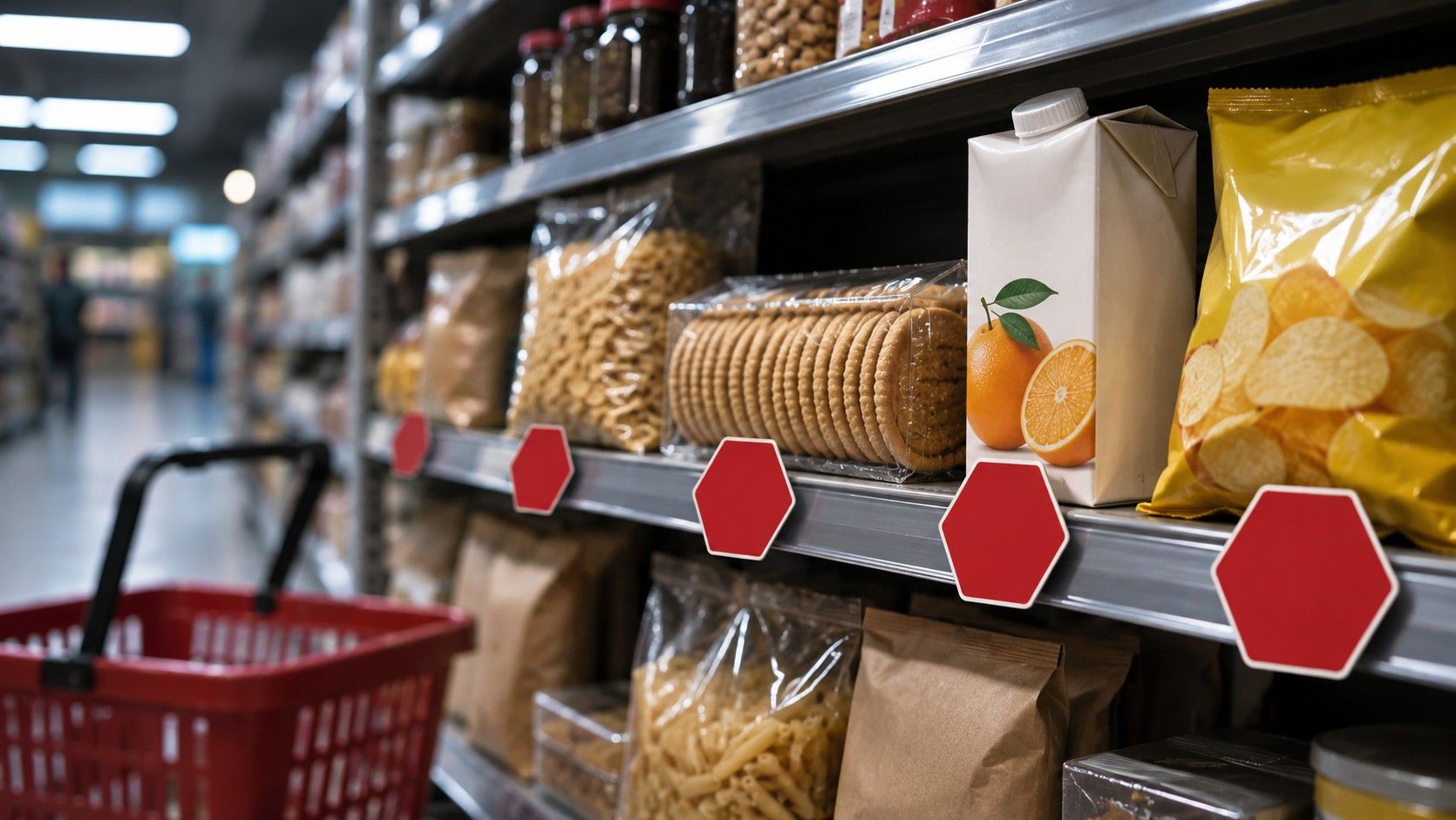
FSSAI had proposed front-of-pack warnings in the form of red hexagons for products high in added saturated fat, added sugar and salt, in an affidavit of 28 August 2026. At an earlier hearing the Bench is reported to have questioned the proposal and asked whether the regulator was yielding to corporate pressure on child health.
What the Court directed
As reported, the Court directed FSSAI to treat total sugars and saturated fat, and not only added sugar and added fat, as nutrients of concern along with salt, and to calculate the thresholds on total values. The thresholds should be neither so low as to cause label fatigue nor so high that most products escape. Each nutrient is to have its own hexagon with a standard pictogram and the words "High Fat", "High Sugar" or "High Salt". One report adds that the hexagons should be red, should cover at least four to five percent of the front panel, and should use legible fonts. FSSAI is to prepare a list of exempt foods, monitor reformulation made to avoid the labels, and keep to its timeline without further extensions. The matter is reported to be listed again after about ten weeks.
The knowledge angle
Front-of-pack labels are meant to let a buyer understand a product's nutrition at a glance. They differ from the back-of-pack nutrition table, which is detailed but hard to use in a shop. The design choices, such as the thresholds, the colour and the size, decide whether a label changes behaviour.
Why it matters
Consumers may soon see clearer warnings. Food companies face possible reformulation and stricter timelines, and FSSAI must now turn the directions into regulations that can themselves be tested in court.