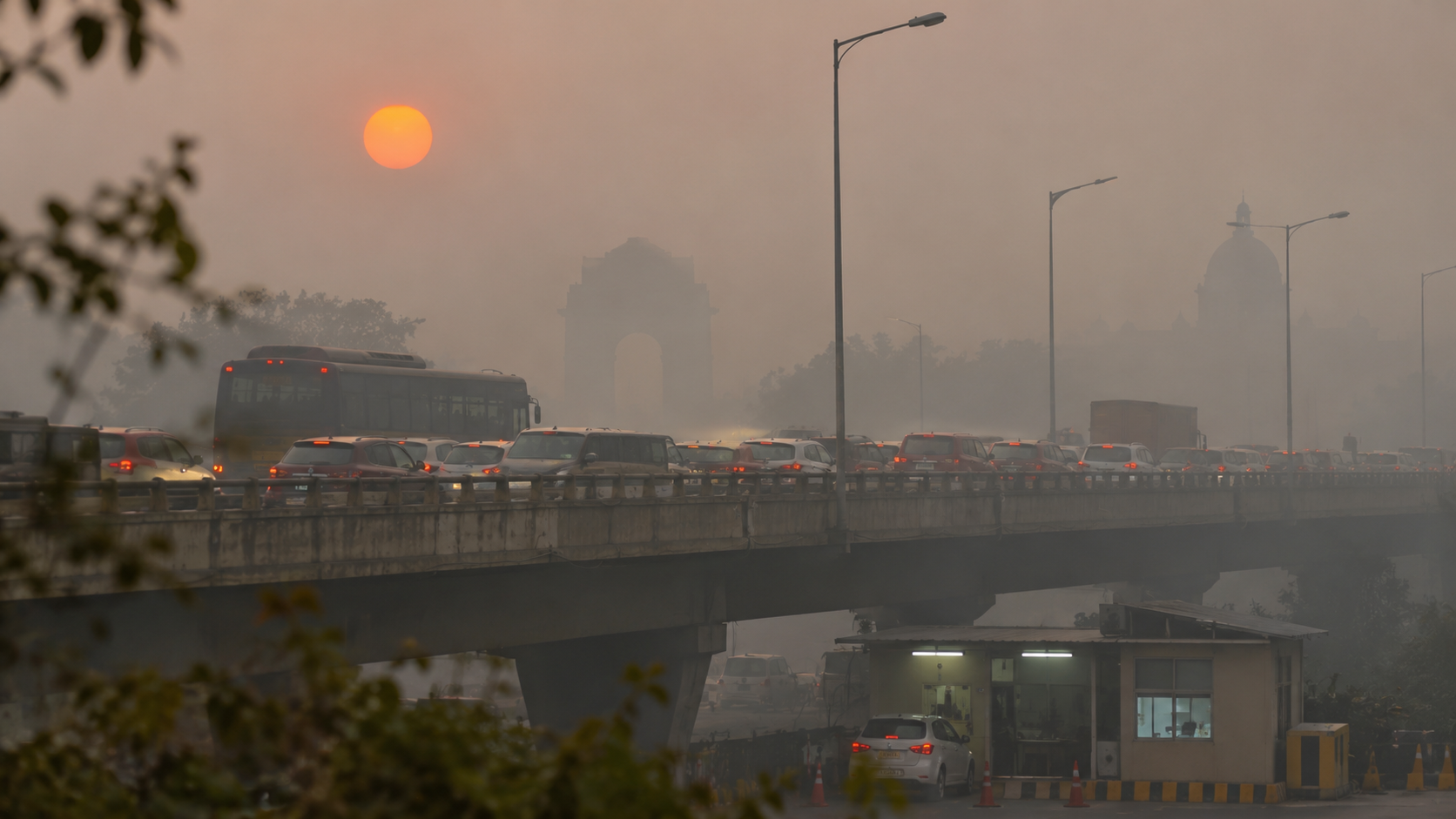
Rs 23,000 Crore in Unpaid Traffic Fines. Now the Supreme Court Says Your Vehicle Can Be Impounded.
In S. Rajaseekaran v. Union of India (Writ Petition (Civil) No. 295 of 2012), a bench of Justice J.B. Pardiwala and Justice K.V. Viswanathan directed on 28 September 2026 that States and Union Territories must check vehicles at random, impound those whose e-challans remain unpaid, and freeze a range of online vehicle services until the fines are cleared. The Court noted that about Rs 23,019 crore in electronic traffic fines is still to be recovered. Here is what the order says, why the Court stepped in, and what every vehicle owner should check before the next renewal or sale.
A Fine You Could Ignore, Until Now
You cross a signal a little late. A camera records it. A message arrives on your phone a few days later, and you tell yourself you will deal with it when you get time. Then nothing happens, so you forget. Millions of vehicle owners have followed exactly this script, and the numbers show it. According to the figures before the Court, e-challan fines worth about Rs 49,194 crore have been imposed, but only about Rs 26,175 crore has been recovered. That leaves about Rs 23,019 crore unpaid, which is nearly half of everything that has been levied. A traffic fine that carries no real consequence for ignoring it does very little to change driving behaviour, and that is the gap the Court has now tried to close.
How E-Challans Work
An e-challan is a traffic penalty issued electronically, usually on the basis of images or data captured by cameras and other devices, and sent to the registered owner of the vehicle. Section 136A of the Motor Vehicles Act, 1988, together with Rule 167A of the Central Motor Vehicles Rules, 1989, provides the framework for this kind of electronic enforcement. The Court also directed the Ministry of Road Transport and Highways to implement its standard operating procedure dated 28 October 2025 without delay, to notify the locations where e-enforcement will operate, and to finalise the purchase, deployment and calibration of the enforcement devices, filing an affidavit with a clear timeline.
What the Supreme Court Ordered
The order works on two fronts. First, States and Union Territories must conduct random checks of vehicles, and where an e-challan has not been honoured, they must take the necessary steps to impound the vehicle. Second, where a vehicle has outstanding dues, the authorities must stop the services that an owner normally needs to keep the vehicle legally on the road. The renewal of the registration certificate and the issue of a duplicate certificate are to be barred. Changes to the owner's address are to be blocked. The fitness certificate is to be denied until every pending fine is cleared. The transfer of ownership is to be stopped, and the vehicle is to be blacklisted on the Parivahan portal. No pollution under control centre is to issue a certificate for such a vehicle. For driving licences, where a person has committed multiple violations, renewal is to be barred and steps are to be taken to suspend a licence that is already in force.
The Five-Offence Rule
The bench also drew attention to Rule 21(25) of the Central Motor Vehicles Rules, as amended and in force from 2026. Under it, a licence holder who commits five or more offences in a year, counted from 1 January 2026, is to be treated as a nuisance or a danger to the public. Read with the new directions, this makes repeat violations far more costly than before, because an unpaid challan is no longer just a pending demand. It can now stand between a driver and the renewal of a licence.
Ideas Still on the Table
The Court did not stop at direct orders. It suggested that States and Union Territories consider linking unpaid traffic challans to electricity bills as a recovery tool, a suggestion that was widely reported but is not a binding direction. It also asked the authorities to consider AI-enabled e-enforcement that can detect the violation categories listed in Rule 167A, a fuller national road safety system that connects the Vahan, Sarathi and e-challan databases, and a public dashboard, updated at least monthly, showing e-enforcement data State by State. The bench was blunt about what happens next, warning that if the directions remain on paper, it may have to take some stern action.
What Vehicle Owners and Buyers Should Do Now
The practical advice is simple. Check whether any challan is pending against your vehicle on the Parivahan portal or your State transport website before you apply for a renewal, a fitness certificate, a pollution certificate or a transfer. Pay what is genuinely due. If you believe a challan is wrong, contest it through the prescribed process promptly and keep your records, because ignoring it will no longer be a safe option. If you are buying a second-hand vehicle, check for pending challans before you pay, since a blocked transfer can leave you holding a vehicle you cannot register in your name. Fleet operators and businesses with many vehicles should audit their challan records now, because the cost of an impounded or frozen vehicle is far higher than the fine itself.
This blog is for general informational purposes and does not constitute legal advice. For guidance on motor vehicle, traffic, or regulatory compliance matters, please contact our team.