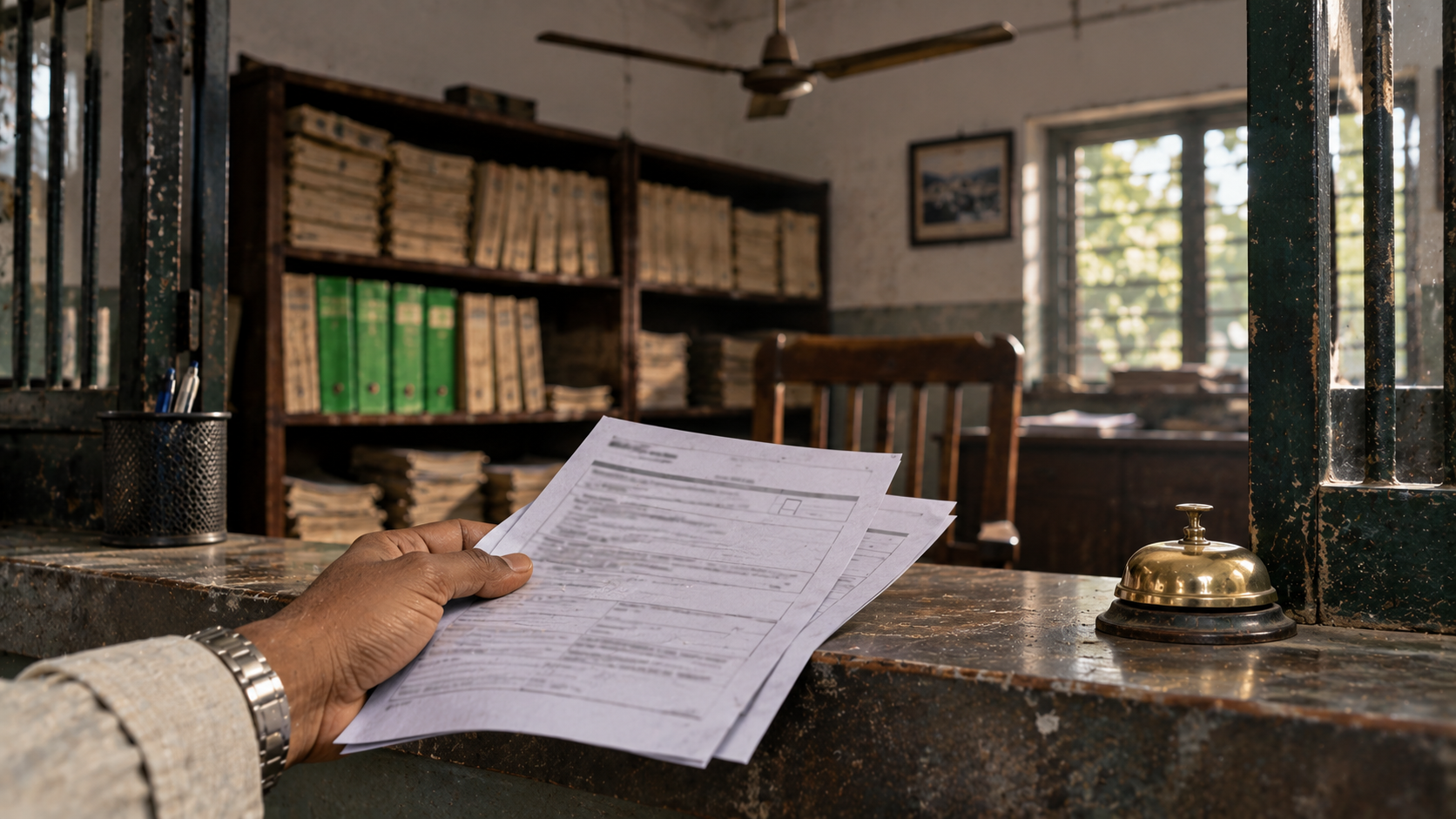
His Mother Signed for the Cheque Bounce Notice. The Supreme Court Says That Counts as Service on Him.
In Sainaba v. State of Kerala and Another (2026 INSC 1069), decided on 30 September 2026, a bench of Justice Ahsanuddin Amanullah and Justice Manmohan held that a statutory demand notice under Section 138 of the Negotiable Instruments Act, 1881, sent by registered post to the drawer's correct address, is validly served even if a family member receives it. The Court set aside a Kerala High Court judgment that had acquitted the drawer because his mother, and not he, had received the notice, and it restored his conviction. It also held that an earlier two-judge ruling, M.D. Thomas v. P.S. Jaleel (2009), was per incuriam and cannot be treated as a binding precedent. Here is the case, the law of service in cheque bounce matters, and what the ruling means for anyone who sends or receives such a notice.
A Loan of Rs 3 Lakh, a Bounced Cheque and a Notice He Never Answered
The complainant said he had lent the accused Rs 3 lakh. The accused issued a cheque to repay it, and the cheque was dishonoured when presented. The complainant sent a statutory demand notice by registered post to the accused's correct address. The accused's mother received it. He neither paid nor replied. In his statement to the trial court under Section 313 of the Code of Criminal Procedure, the accused said he had borrowed Rs 7 lakh in all, had repaid every rupee, and had given a blank signed cheque when he borrowed the Rs 3 lakh. The trial court convicted him under Section 138, and the appellate court upheld the conviction. The Kerala High Court, however, allowed his revision and set aside the conviction on a single ground, that the notice had been received by his mother and not served on him personally.
How Section 138 Works
A cheque bounce becomes a criminal offence under Section 138 only if certain steps are followed. The payee must send a written demand notice to the drawer within 30 days of learning that the cheque was dishonoured. The drawer then has 15 days from receiving the notice to pay. Only if the drawer fails to pay within that period can a complaint be filed. This means that the notice is not a formality. It is the step that gives the drawer one last chance to pay, and a conviction can be challenged if the notice was never validly given. That is why disputes about who received the notice, and when, come up in so many cheque bounce trials.
What the Supreme Court Decided
The Court held that once the notice has been sent by registered post to the correct address, the requirement of giving notice under the proviso to Section 138 is satisfied. A presumption of service then arises, which the drawer can rebut, but the burden is on him. Relying on Section 27 of the General Clauses Act, 1897, and on the three-judge bench decision in C.C. Alavi Haji v. Palapetty Muhammed (2007), it held that service is presumed once a properly addressed notice is posted. The accused would have to show that the address was wrong, that he did not know the notice had reached his home, or that his relationship with his mother was so hostile that she would not have passed it on. He proved none of these. The High Court had therefore erred in overturning the concurrent findings of the trial and appellate courts merely because the notice was not personally delivered to him.
Why M.D. Thomas Was Set Aside as Per Incuriam
In M.D. Thomas v. P.S. Jaleel (2009), a two-judge bench had set aside a conviction because the notice was served on the drawer's wife, without considering Alavi Haji. The Supreme Court now held that M.D. Thomas was decided per incuriam, which means in ignorance of a binding earlier decision, and so it cannot be treated as a binding precedent under Article 141 of the Constitution. This matters beyond this one case, because lower courts had long cited M.D. Thomas to acquit drawers whose notices were received by relatives. That line of defence is now much weaker.
What the Court Ordered
The appeal was allowed and the High Court judgment was set aside. The trial court's judgment was restored. The accused must undergo simple imprisonment for six months and pay a fine of Rs 3 lakh, with further imprisonment in default of payment.
What This Means for Drawers and Payees
For payees, the lesson is to send the notice by registered post to the drawer's correct and current address, and to keep the postal receipt and tracking record, because these are the foundation of the presumption of service. For drawers, the ruling is a warning that a notice received by a spouse, parent or other family member at your address will be treated as received by you, and that doubts about service should be proved with evidence, not just asserted. Ignoring a notice because it was handed to someone else is no longer a safe defence. If you are served with a cheque bounce notice, take legal advice at once and respond within the 15 days available, because the window to avoid prosecution is short.
This blog is for general informational purposes and does not constitute legal advice. For guidance on cheque bounce matters, recovery of dues, or Section 138 proceedings, please contact our team.