Delhi Gets Two Nights of Green Crackers This Diwali. The Supreme Court Says the Complete Ban Returns Right After.
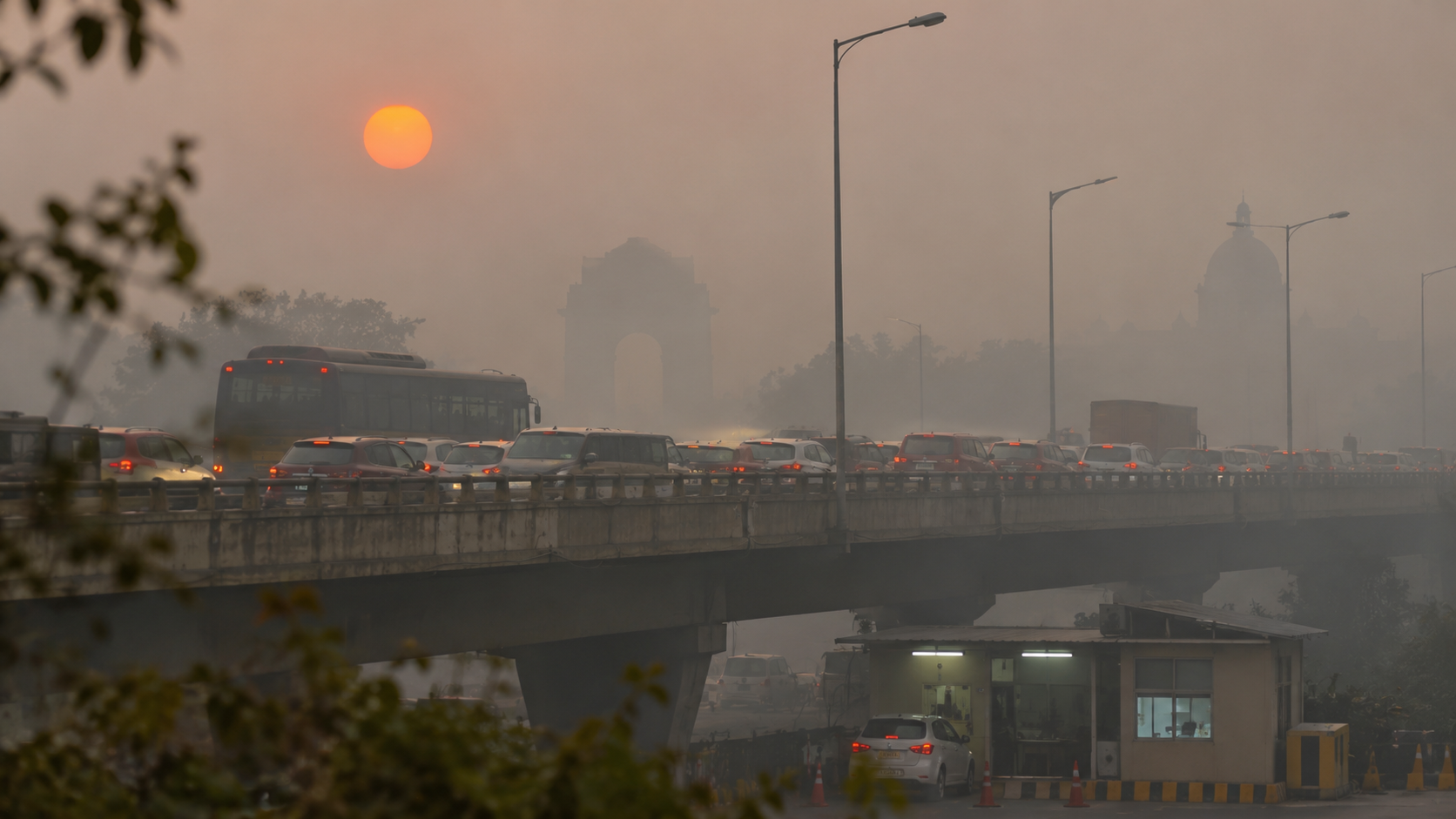
In Arjun Gopal and Others v. Union of India and Others (2026 INSC 1181, I.A. No. 325852 of 2025 in W.P.(C) No. 728 of 2015), reported on 2 November 2026, a bench of Justice M.M. Sundresh and Justice P.B. Varale declined to order a blanket ban on firecrackers in Delhi-NCR this Diwali and instead permitted only crackers certified as green by CSIR-NEERI, to be burst on 7 and 8 November within fixed hours. The Court said a total ban looked ideal on paper but that it did not have enough data to say it would solve the pollution problem, and it warned that the complete ban was feeding an illegal trade in ordinary crackers sold as green ones. The year-round ban is to be restored immediately after the festival period. Here is the long road to this order, the constitutional reasoning, the detailed conditions, and what they mean for traders, residents and officials.
A Petition Filed in 2015 on Behalf of Three Children
The case began in 2015 as a petition filed on behalf of three infants who asked for a blanket ban on the sale and use of firecrackers in the National Capital Region because the air was becoming unsafe to breathe. Over the years the Court passed a series of orders. In 2018 it banned barium salts in fireworks and prohibited joined crackers, the long strings popularly called laris. In 2024 a complete ban was imposed across Delhi-NCR. In October 2025 the Court relaxed that ban for green crackers during Diwali after the Centre and the Delhi Government jointly asked for it. The present order came on a fresh set of applications. A shopkeepers' association wanted its cancelled licences restored, a federation of traders wanted to manufacture, store, sell and use CSIR-NEERI approved green crackers, and the Ministry of Environment, Forest and Climate Change sought permission to use further reduced amounts of barium nitrate, a change it said would cut emissions by about 45 to 50 per cent. The Amicus Curiae argued for a complete ban and a health assessment of residents, while the Union, the Delhi Government and the Commission for Air Quality Management said an action plan was being put into effect.
Why the Court Would Not Simply Extend the Ban
The Court made two practical observations. First, air quality readings had not improved in any significant way despite the 2024 ban, which made it hard to say that a total prohibition was working. Second, the ban appeared to be encouraging the illegal sale of conventional crackers dressed up as green crackers, while blocking people from buying tested green products. The bench also found that the State had not fully complied with the directions issued during the earlier temporary relaxation. None of this was treated as a reason to relax vigilance. The Court stressed that regulation and monitoring must continue beyond the festive season, with periodic review of pollution and its effect on health, and it described its approach as precautionary.
Religion, Health and Article 21
The order places the dispute in a constitutional frame that every litigant in an environment case should recognise. The right to practise religion under Article 25(1) is not absolute. It is subject to public order, morality, health and the other provisions of Part III. The right to life under Article 21 includes the right to a healthy, pollution-free environment. A religious or festive practice therefore enjoys only a qualified protection and cannot override those limits. At the same time, the Court acknowledged the religious and social importance of Deepawali and observed that environmental degradation defeats the very purpose of the celebration.
What Is Allowed, Where and When
Crackers may be burst only between 6 and 7 in the morning and between 8 and 10 at night on 7 and 8 November 2026, on the same lines as the order of 15 October 2025. No bursting is allowed within 300 metres of hospitals, nursing homes, primary and district health centres, old-age homes and notified silence zones, and the same restriction applies to educational institutions. These areas must be marked on the ground and published. Only manufacturers certified by CSIR-NEERI and PESO may make green crackers, and production is limited to products uploaded on the CSIR-NEERI website between 2 and 6 November 2026. Joined crackers and garlands remain banned, as do crackers containing barium or not approved as green. Traders whose licences had been cancelled get them back temporarily from 4 to 6 November, only to sell approved green crackers. Any licence holder who violates the directions loses the licence immediately and cannot sell for the rest of the period, and all manufacturers and traders in Delhi-NCR must furnish a monetary security fixed by the authorities.
Enforcement, Reports and the Next Hearing
Police and district administrations must form patrolling teams that know the order and the CSIR-NEERI list, carry out regular checks, seize illegal crackers on the spot, prosecute offenders and randomly verify QR codes on packaging. The Central Pollution Control Board and the State Pollution Control Boards must monitor air quality and prepare reports before, during and after Diwali, including a comparison of sand and water samples, and non-functional monitoring stations must be repaired. State authorities must publish the winter action plans, run advisories in newspapers and on television, teach schoolchildren about pollution, and spread the message through official websites, social media and the Delhi Metro audio system. The State must file affidavits on its enforcement steps and on the exact increase in hospital admissions after the festival, and the Union must file one on enforcement. The Court warned of strict contempt action against officials who do not comply, asked the Bar, celebrities and sportspersons to join a voluntary awareness campaign, and listed the matter for compliance on 12 December 2026.
What This Means Beyond Delhi
For traders, the order is a reminder that a licence in this field is conditional and can disappear overnight on a single violation. For residents, it shows how a court tries to balance a cherished festival against measurable harm, using time windows and no-cracker zones instead of an outright prohibition. For officials, the personal contempt warning and the demand for hospital admission figures raise the cost of paper compliance. The order applies only to Delhi-NCR, but Gujarat marks Diwali and the New Year with the same enthusiasm and its cities face their own festival-season air and noise concerns. The reasoning on Article 25 and Article 21 is general, and any High Court, including the Gujarat High Court, can draw on it when a similar question arrives.
This blog is for general informational purposes and does not constitute legal advice. For guidance on environmental compliance, licensing or public interest litigation, please contact our team.