Supreme Court Tells FSSAI to Put Separate Red "High Sugar", "High Salt" and "High Fat" Warnings on the Front of Packaged Foods
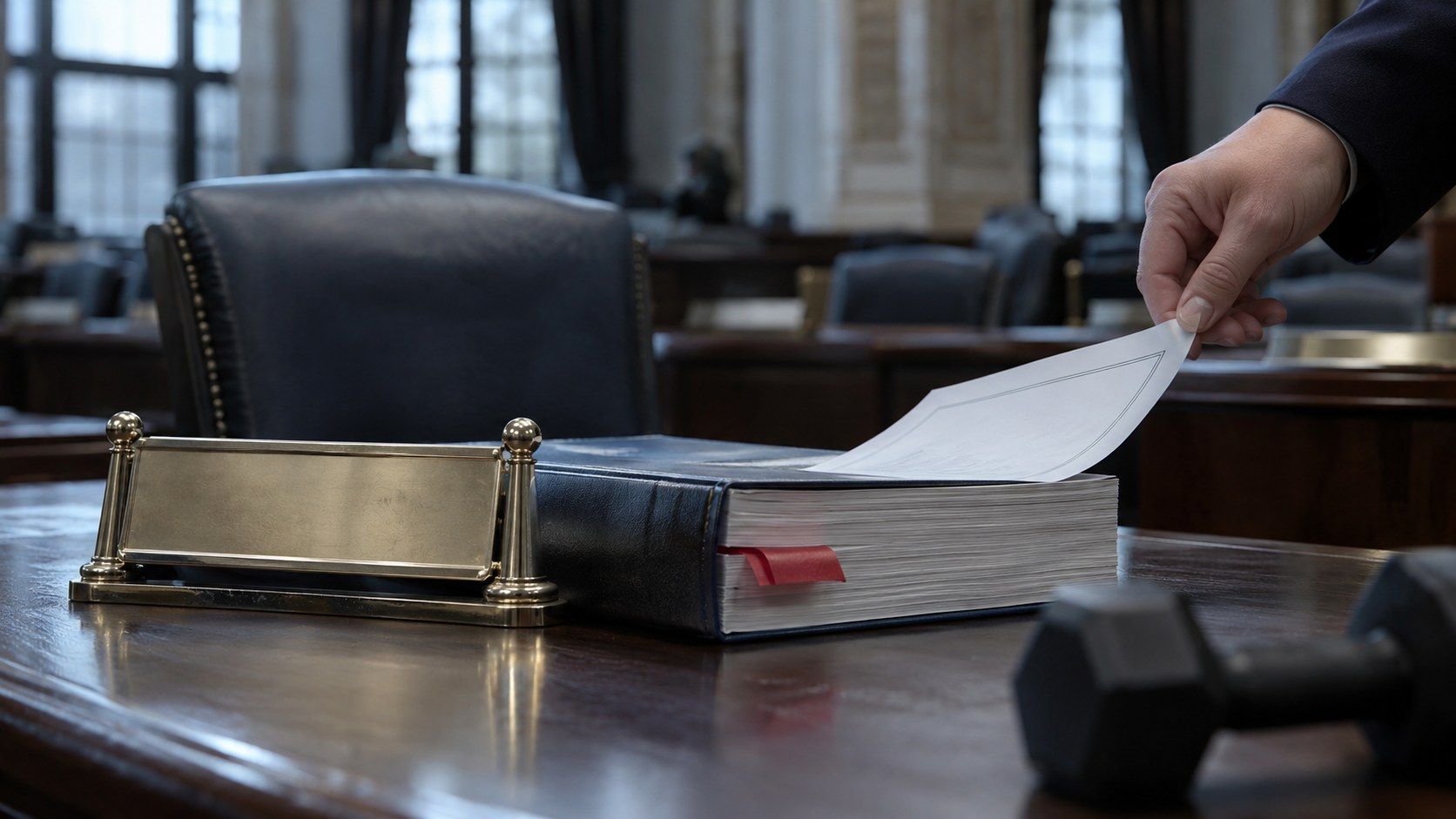
On 26 November 2026, a Supreme Court Bench of Justice J.B. Pardiwala and Justice K. Vinod Chandran gave directions to the Food Safety and Standards Authority of India on front-of-pack labelling of packaged foods, in a public interest petition by 3S and Our Health Society. This account rests on published reports of the order, which differ on some details, and not on the order itself, so it should be checked before it is relied upon. Here is the story, the legal reasoning, and what it means.
The Packet You Pick Up Without Reading
Most shoppers pick up a packet, glance at the front and put it in the trolley. The nutrition table is on the back, in small print, in a form many people cannot easily decode. A biscuit marketed as a healthy snack can be high in sugar and fat, and a person would have to turn it over, find the table and do some arithmetic to know.
Front-of-pack labelling tries to fix that. A clear warning on the front tells the buyer in a second what the product is high in. Several countries use such labels, and Chile is often cited for its black warning octagons. In India, the petition asked the Court to direct FSSAI to bring in warnings for salt, sugar and fat.
What FSSAI Had Proposed
At an earlier hearing, the Bench is reported to have criticised FSSAI and asked whether it was bowing to corporate pressure on child health. FSSAI's affidavit of 28 August 2026 proposed red hexagons for products high in added saturated fat, added sugar and salt, with words such as "High Fat", "High Sugar" and "High Salt". The reports differ on whether a warning would follow when one nutrient crossed its limit or only when two or more did, so the exact proposal should be checked.
What the Supreme Court Directed
As reported, the Court directed FSSAI to treat total sugars and saturated fat, and not only added sugar and added fat, as nutrients of concern, along with salt. The thresholds are to be calculated on total values. The Court is reported to have said that thresholds that are too low cause label fatigue, because everything carries a warning and consumers stop noticing it, while thresholds that are too high let most products escape.
Each nutrient of concern is to have its own hexagon, with a standardised pictogram and the words "High Fat", "High Sugar" or "High Salt", and not a single combined hexagon. One report adds that the hexagons should be red, should cover at least four to five percent of the front panel unless there is a reason to depart from that, and should use legible fonts. FSSAI is to prepare a defined list of foods that are exempt, to monitor whether manufacturers reformulate with preservatives or additives to avoid the labels, and to keep to its own timeline without further extensions of the transition period, dealing strictly with those who do not comply. The matter is reported to be listed again after about ten weeks for a progress report on the draft regulations.
What This Means for Different Readers
For consumers, the direction promises a plain warning for each problem nutrient. The hexagons are meant to be read at a glance, without needing to decode the back of the pack.
For food companies, the use of total sugar and saturated fat, and the separate hexagons, may bring more products within the warning net. Reformulation to dodge the thresholds is something the Court has asked FSSAI to watch.
For regulators and lawyers, the order is another example of a court supervising a regulator's rule-making through a public interest petition. The details will have to be written into regulations, and those regulations can be tested in turn.
For parents and health professionals, the case links labelling to child health. The Court's concern with how warnings are designed is a reminder that a label works only if people notice and understand it.
This blog is for general informational purposes and does not constitute legal advice. For guidance on food labelling and regulatory compliance, please contact our team.