
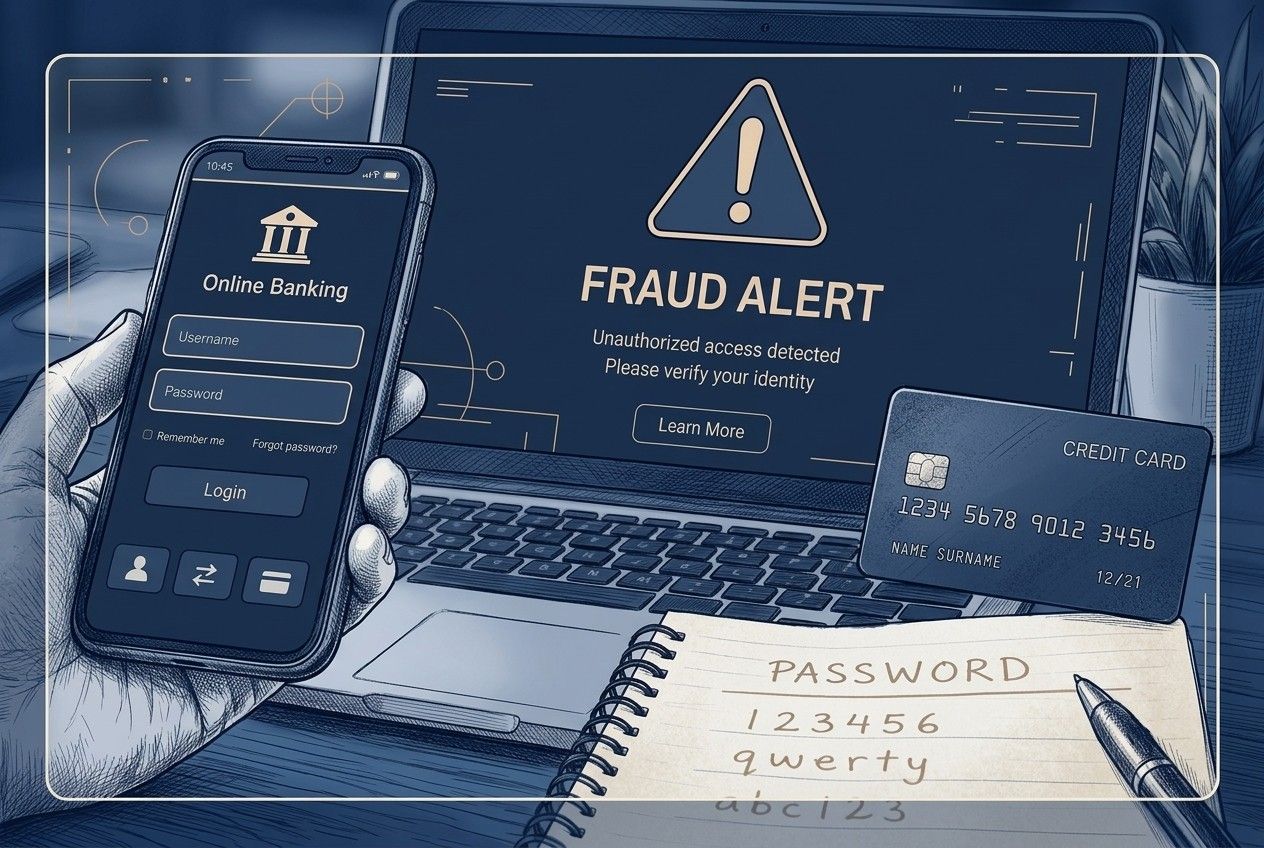
This research examines the legal frameworks, fraud mechanisms, and institutional shortcomings surrounding E-Banking and online banking systems in India. It explains how the rapid growth of digital payments under the Digital India initiative has transformed financial transactions but also increased the risks of cyber fraud and digital financial crime. It highlights how India’s regulatory structure, including the Information Technology Act, the Digital Personal Data Protection Act, and the Reserve Bank of India’s security directives, attempts to control these risks while protecting citizens’ financial data and digital transactions.
It discusses the legal foundation of India’s digital governance, particularly the role of the Information Technology Act, 2000 and its 2008 amendment. It explains that the Act provides legal recognition to electronic records and digital signatures while also criminalizing cyber offences such as identity theft, hacking, and cheating by personation. However, it argues that despite these provisions, the law still struggles to address modern cyber threats because of outdated definitions and relatively weak punishments for large-scale digital crimes.
It further analyzes the Digital Personal Data Protection Act, 2023, which aims to strengthen privacy protection in the digital economy. The legislation introduces new concepts such as data fiduciaries, data principals, and consent managers, ensuring that organizations process personal data responsibly. It also emphasizes principles such as consent-based data collection, purpose limitation, data minimization, storage limitation, and institutional accountability to ensure better control over personal information in digital banking environments.
Another major aspect explained is the role of the Reserve Bank of India in securing digital payments. It describes the RBI’s Master Direction on Digital Payment Security Controls, which requires banks to implement multi-factor authentication, adaptive authentication, device security, and encryption technologies. These measures are designed to protect internet banking, mobile banking, card payments, and digital wallets from cyber attacks while ensuring secure digital financial transactions for citizens.
The article also examines common online banking fraud techniques used by cyber criminals in India. It explains several widely used scam methods such as digital arrest scams, UPI “receive money” frauds, SIM swapping attacks, KYC update scams, remote access fraud, and the use of money mule accounts to transfer stolen funds. It argues that many of these scams rely more on psychological manipulation and social engineering than on technical hacking.
In addition, it identifies several institutional and systemic shortcomings in the current financial regulatory system. These include weak KYC monitoring that allows mule accounts to operate, slow coordination between banks and law enforcement agencies, outdated legal penalties, and the absence of standardized verification systems for official government communications. It also highlights that a major challenge is the digital literacy gap among citizens, where people can use digital tools but lack awareness about cyber security and fraud prevention.
Key Points Covered in the Article
- Evolution of India’s digital banking ecosystem and rise of cyber risks.
- Legal framework governing online transactions under the IT Act, 2000.
- Data protection reforms introduced through the DPDP Act, 2023.
- RBI’s security regulations for digital payments and online banking.
- Major online fraud techniques used by cyber criminals in India.
- Institutional failures and regulatory loopholes enabling financial scams.
- Need for stronger digital literacy, faster enforcement, and integrated cyber security systems.
Finally, it concludes that India’s digital payment ecosystem is technically advanced but still reactive rather than preventive. It suggests that stronger verification protocols, real-time freezing of suspicious funds, improved regulatory coordination, and widespread cyber awareness are essential for building a secure digital financial environment in the future.