
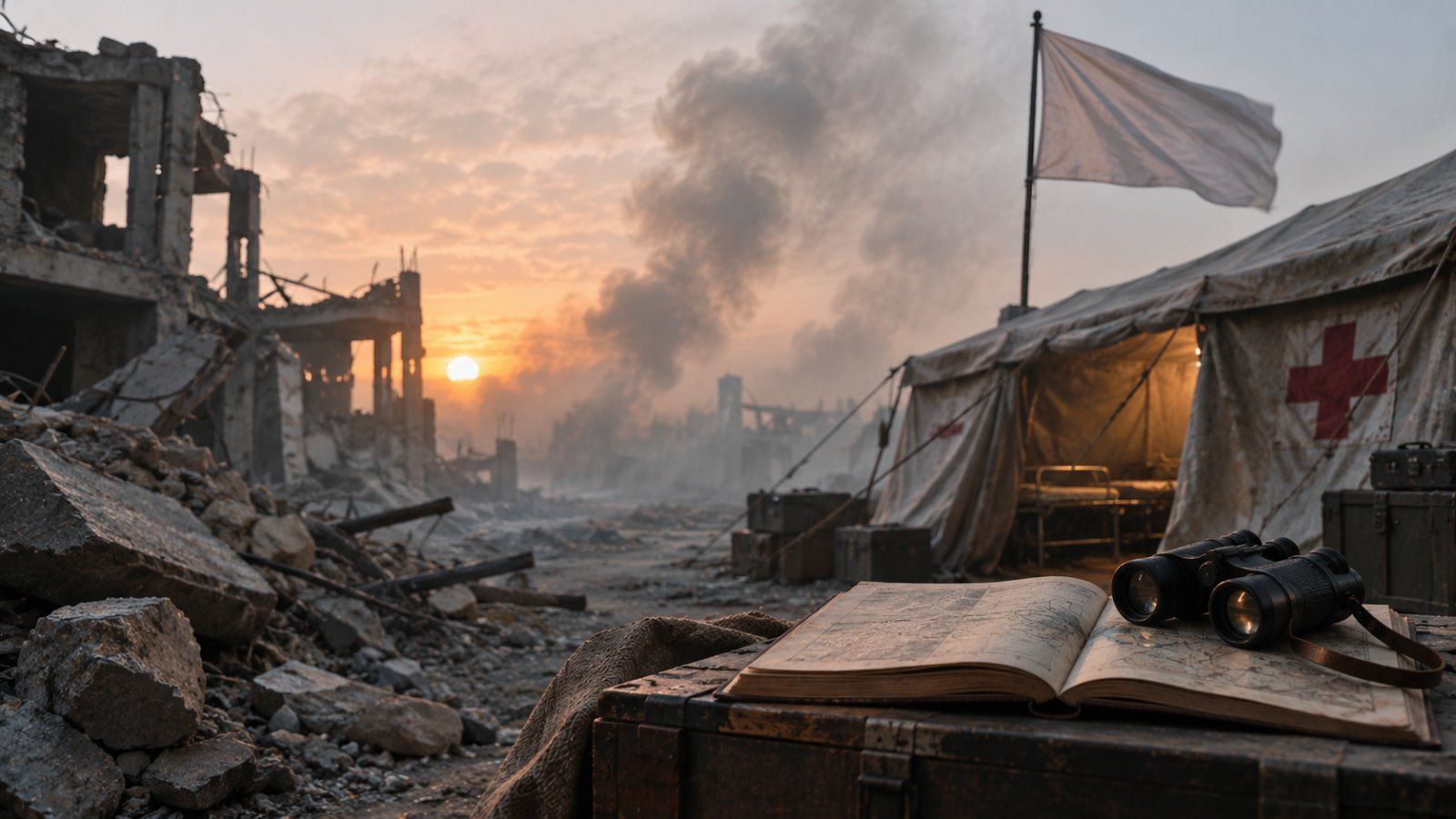
This article is a complete reference guide to international humanitarian law, the body of rules that governs how wars are fought and who is protected.
Part 1 separates the two questions of international law: whether force may be used at all and how a war must be fought.
Part 2 sets out the sources: the Hague Conventions, the four Geneva Conventions, the Additional Protocols, weapons treaties and customary law.
Part 3 explains the difference between international and non-international armed conflicts.
Part 4 covers the core principles of distinction, proportionality, precaution, necessity and humanity.
Part 5 explains who is protected, including civilians, the wounded, prisoners of war and humanitarian workers.
Part 6 lists prohibited weapons and methods, Part 7 explains occupation, Part 8 deals with enforcement and accountability, and Part 9 explains why the law matters to businesses and ordinary readers.