
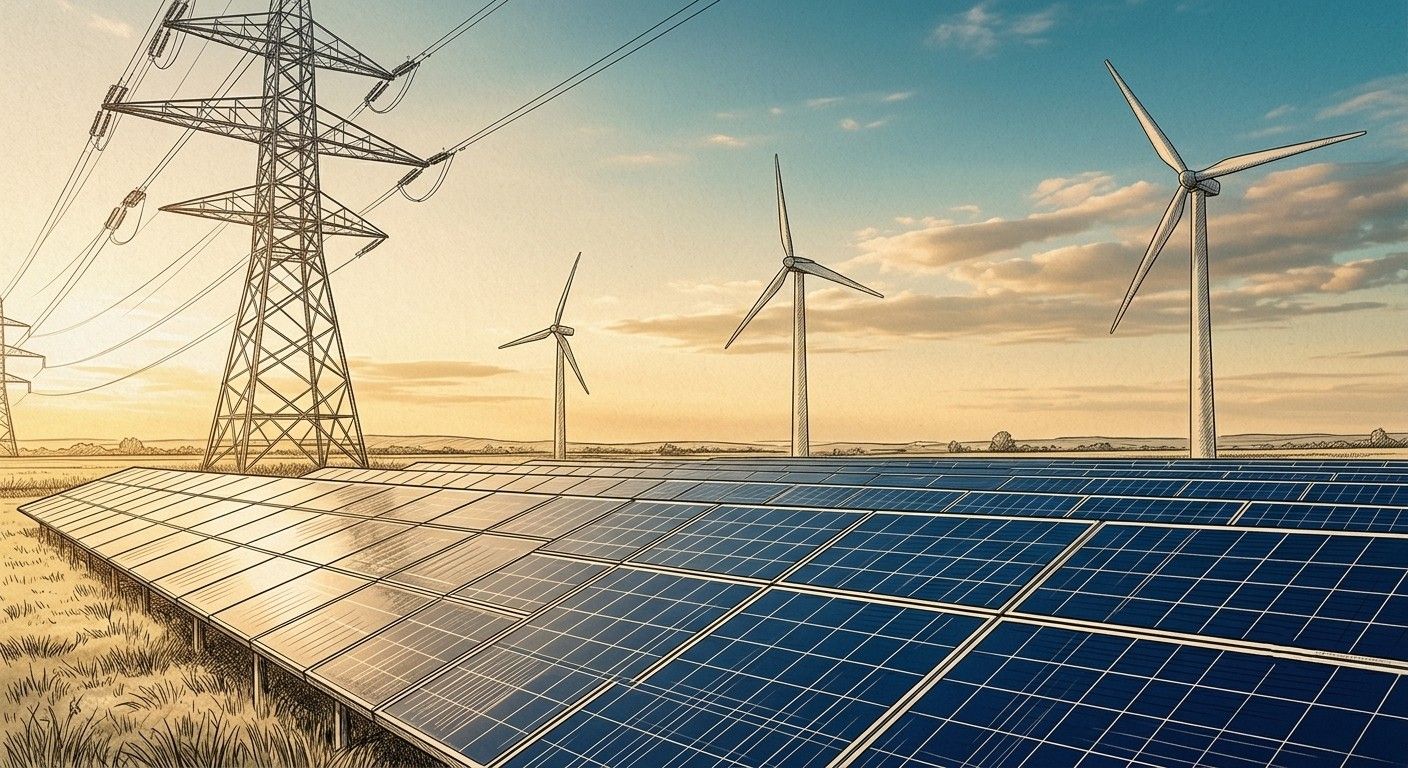
The research examines the legal, regulatory, and policy framework governing renewable energy development in India and explains how the country is transitioning from a fossil-fuel-dependent energy system to a renewable-driven model. It analyzes the statutory foundations of the power sector, major government initiatives, financial incentives, and modern technological strategies that support renewable energy adoption. It highlights India’s long-term energy goals such as achieving 500 GW of non-fossil fuel capacity by 2030 and net-zero emissions by 2070, and explains how legislation, public schemes, and technological innovation together form a comprehensive ecosystem for sustainable energy development.
It further discusses the legal and regulatory architecture of the electricity sector, particularly the role of the Electricity Act, 2003 in establishing the structural foundation for renewable energy governance. It explains how regulatory bodies such as the Central Electricity Regulatory Commission (CERC) and State Electricity Regulatory Commissions (SERCs) ensure tariff regulation, market efficiency, and renewable energy promotion. It also explains policy mechanisms such as the National Electricity Policy and Renewable Purchase Obligations, which guide planning and encourage renewable energy generation across states.
The article also focuses on government schemes and policy initiatives that promote renewable energy adoption among households, industries, and farmers. It explains major programs such as the PM Surya Ghar rooftop solar scheme, the PM-KUSUM agricultural solarization program, and the Production Linked Incentive (PLI) scheme for solar manufacturing. It highlights how subsidies, financial incentives, and domestic manufacturing policies aim to reduce dependence on imports, expand solar installations, and increase participation of citizens and industries in renewable energy generation.
It additionally analyzes the technological and market innovations shaping India’s renewable energy ecosystem. The article discusses initiatives such as smart grids, energy storage systems, carbon credit trading, and green hydrogen development, which are designed to ensure grid flexibility and reduce carbon emissions in energy-intensive industries. It also examines modern models such as peer-to-peer energy trading, solar-plus-storage systems, and digital energy platforms that allow consumers to actively participate in the energy market.
Overall, it concludes that India’s renewable energy transition is supported by a comprehensive combination of legal regulation, fiscal incentives, technological integration, and consumer participation. The coordinated implementation of national policies, state-level initiatives, and innovative market mechanisms demonstrates that renewable energy in India is not only an environmental necessity but also a strategic driver of economic growth, energy security, and sustainable development.
Key Points Covered in the Article
- Legal framework of renewable energy under the Electricity Act, 2003
- Role of CERC and SERCs in regulating the electricity market
- Government initiatives such as PM Surya Ghar and PM-KUSUM
- Manufacturing incentives through the Production Linked Incentive (PLI) scheme
- Development of Green Hydrogen Mission and energy storage systems
- Introduction of carbon markets and carbon credit trading schemes
- State-level renewable energy policies such as those of Gujarat and Delhi
- Emerging technologies like smart grids, P2P energy trading, and solar-plus-storage systems